

The Science of Indian Cooking

Rasa

Where Ancient Flavors Meet Modern Science

Every spice tells a story. Every reaction creates a flavor. Understand the chemistry, master the kitchen.

The Philosophy

Every recipe tells you what to add.
Rasa tells you why — the chemical reactions, the molecular transformations, and the exact moment each ingredient should enter the pan.

✦ ✧ ✦

Molecular

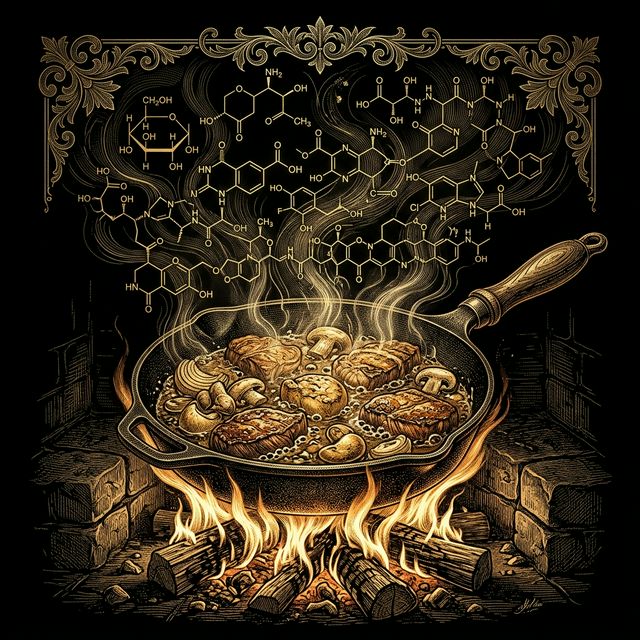
The Maillard Reaction

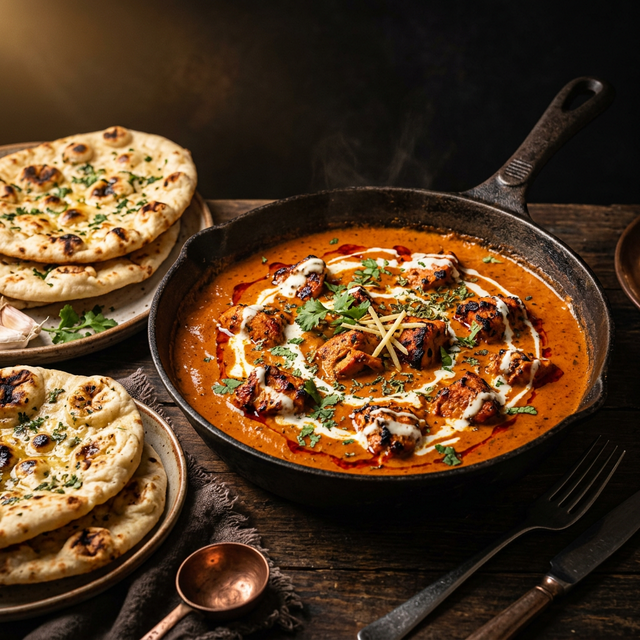
That deep brown crust on your chicken isn't luck. It's 180°C proteins and sugars bonding to create over 1,000 distinct flavor molecules.

Tap to explore
Maillard Reaction Diagram
Polymers Bonding

Chemistry

Volatile Aromatics

Terpenes in cardamom and curcumin in turmeric are fat-soluble. Blooming them in hot ghee isn't tradition — it's science maximizing bioavailability.

Tap to explore
Volatile Aromatics Blooming
Lipid Extraction

Timing

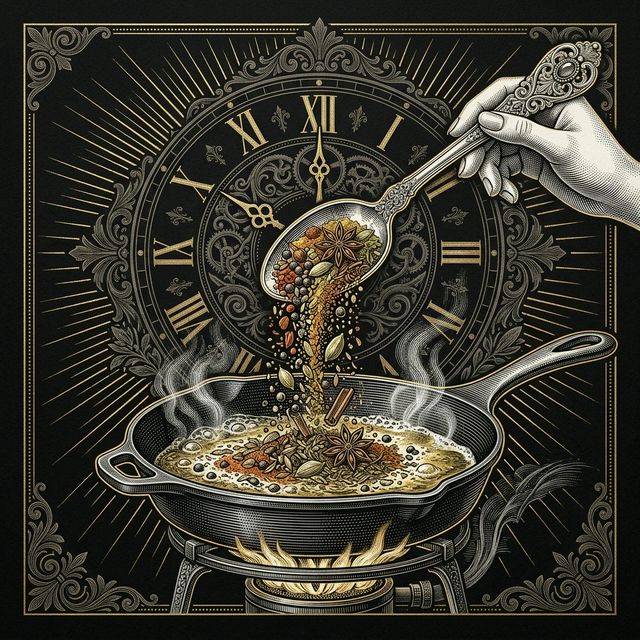
The Perfect Bloom

Add spices 30 seconds too late and you lose 60% of their flavor compounds. The order and timing of every ingredient is as precise as a formula.

Tap to explore
The Perfect Bloom Timing
Critical Window

Now that you know the science,
meet the ingredients that make it happen.

THE SPICE CABINET

Ancient Ingredients, Modern Science

Every spice in your kitchen is a pharmaceutical. Here's what's really happening.

01 Compound · Safranal C10H14O
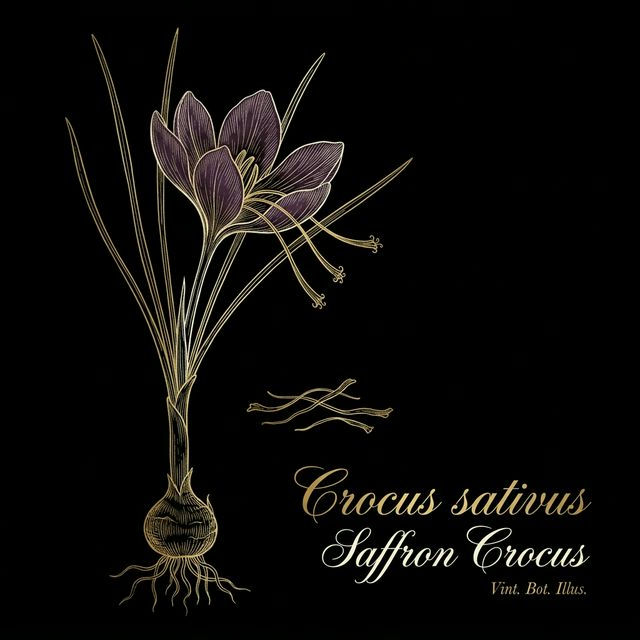
Saffron botanical illustration

Crocus sativus

Saffron

A neurochemical response identical to mild serotonin release.

Safranal triggers that response with a single note. The most expensive spice on earth costs more than gold by weight — and earns it.

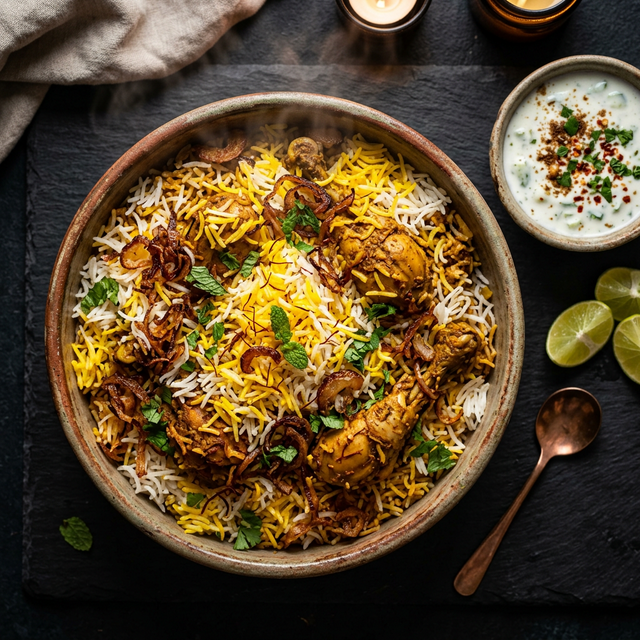
Beyond safranal, saffron carries crocin — the carotenoid that stains a whole pot of biryani gold from just a pinch — and picrocrocin, the compound behind its faint honeyed bitterness. Studies on mood and mild low spirits have put saffron head-to-head with standard treatments and found it holds its own at a fraction of the dose. In the kitchen: bloom the threads in warm milk or ghee, never dry heat — safranal is volatile and burns off if you rush it.

02 Compounds · Anethole + Cinnamaldehyde C10H12O + C9H8O
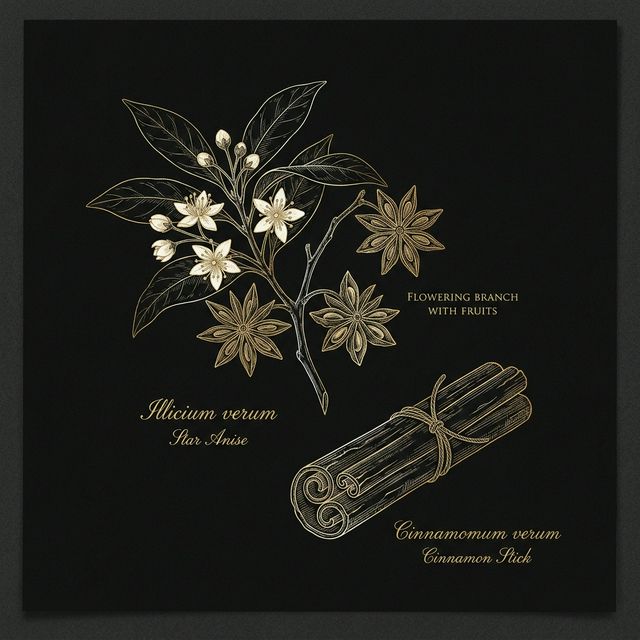
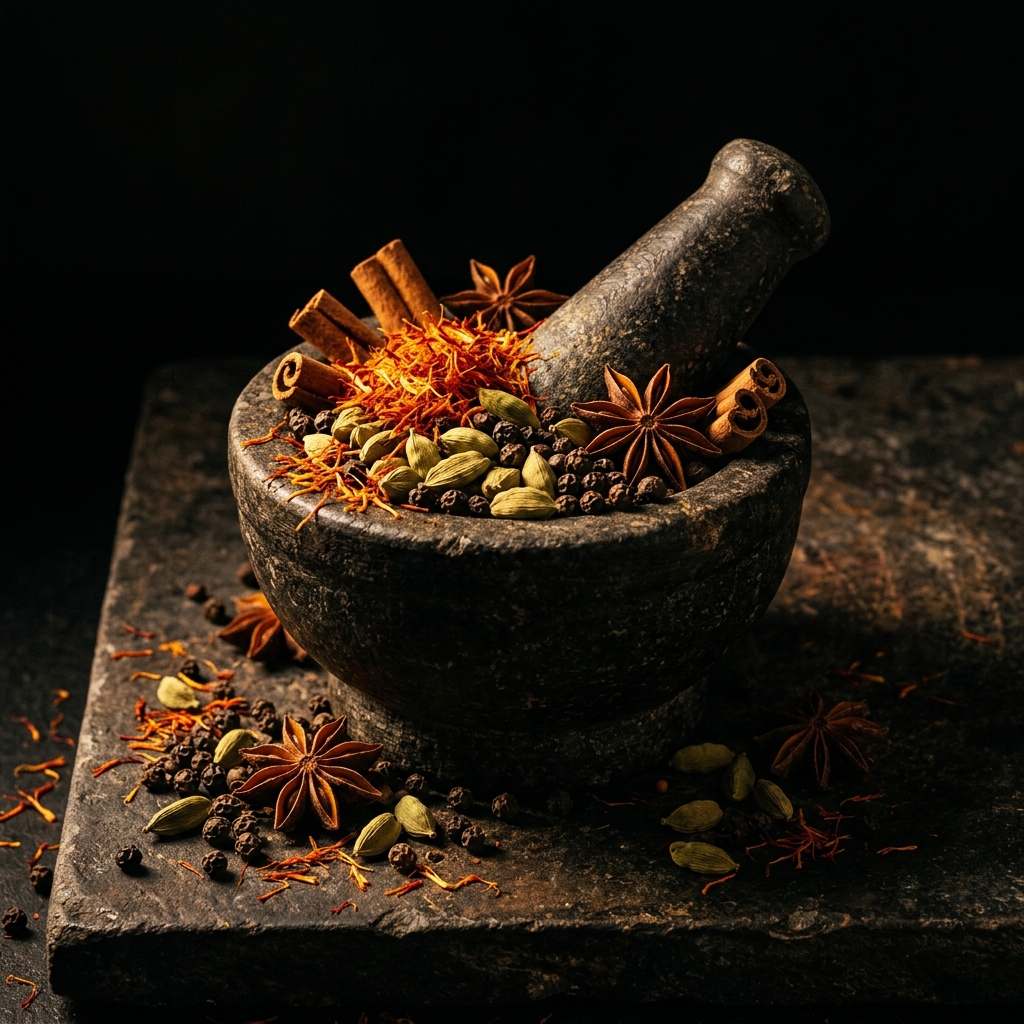
Star anise botanical illustration

Illicium verum · Cinnamomum verum

Star Anise & Cinnamon

The unmistakable base of every Hyderabadi biryani masala.

Anethole and cinnamaldehyde form a volatile aromatic partnership — together they build the aromatic foundation the whole dish is layered on.

Anethole (the sweet, licorice-like note of star anise) and cinnamaldehyde (the warm heart of true cinnamon) are both fat-soluble — which is why they need the tempering oil at the start of a biryani to fully release. Star anise also lends shikimic acid, the same molecule once used as a starting point for antiviral medicine. In the kitchen: add whole to hot ghee for 20–30 seconds until fragrant before the onions — this "blooms" the aromatics into the fat that carries flavor through the entire dish.

03 Compound · 1,8-Cineole C10H18O
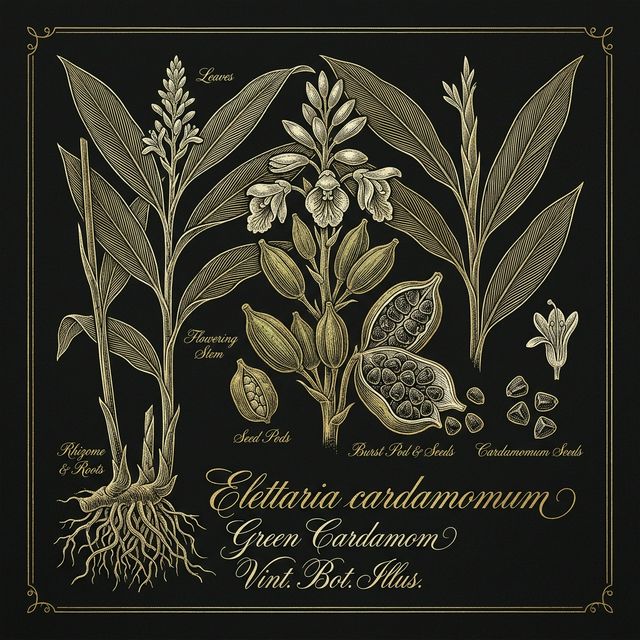
Green cardamom botanical illustration

Elettaria cardamomum

Green Cardamom

Why biryani breath is never cardamom breath.

Contains 1,8-cineole, a compound proven to enhance cognitive function. It also neutralizes the sulfur compounds in garlic — the reason the finish stays clean.

1,8-cineole (also called eucalyptol) is the same brisk, cooling compound found in eucalyptus and rosemary — which is why cardamom reads as "clean" rather than heavy. It's been studied for sharpening attention and memory, and it quietly binds the volatile sulfur left behind by garlic and onion, resetting the palate between rich bites. In the kitchen: lightly crush the pods to crack them before adding — whole pods barely release, powdered ones turn bitter and fade fast.

04 Compound · Curcumin + Piperine C21H20O6 + C17H19NO3
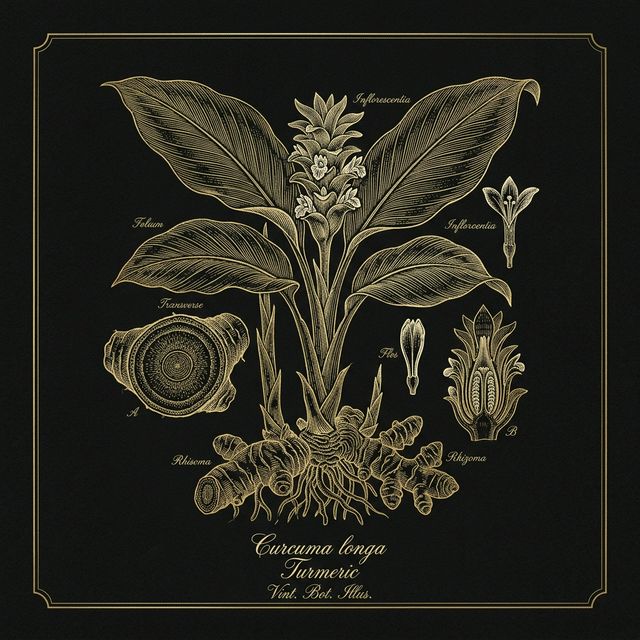
Turmeric botanical illustration

Curcuma longa

Turmeric

Absorption jumps 2000% — figured out 5,000 years ago.

Curcumin has 1% bioavailability alone. Add black pepper's piperine and absorption jumps 2000%. Add fat (ghee) and it skyrockets. Indian cooking solved this millennia before the science.

Curcumin is famously hard for the body to absorb on its own — most of it passes straight through. Piperine, the pungent compound in black pepper, blocks the liver enzyme that clears curcumin, keeping it in the bloodstream far longer; that's the ~2000% jump. And because curcumin is fat-soluble, cooking it into ghee or oil is what actually delivers it. Traditional Indian cooking pairs all three by instinct — turmeric, pepper, and fat, together in nearly every base. In the kitchen: never add turmeric to a dry pan — bloom it in the oil with the aromatics so it's absorbed, not wasted.

The Rasa Universe

One Platform.
Every Member of Your Family.

Ayurvedic wisdom meets modern food science — for your kitchen, your child, and your four-legged family member.

01 The Kitchen Flagship Experience

Rasa

The Science of Indian Cooking

  • 200+ recipes with molecular science explanations
  • AI Chef — personalized cooking intelligence
  • Daily Technique — build your cooking identity
  • 52+ ingredient nutrient guide
Explore Recipes →
02 The Little Ones Ages 1–5 Years

Little Rasas

Ayurvedic Children's Nutrition

  • Age-progression recipes from weaning to age 5
  • Immunity-building Ayurvedic herbs — turmeric, tulsi, ghee
  • Allergen awareness with introduction guides
  • Brain-development food science for parents
Explore Little Rasas →
03 The Four-Legged Vet-Verified Science

Rasa Paws

Canine Nourishment Science

  • 12+ dog-safe Ayurvedic recipes — turmeric, ginger, ragi
  • Ingredient safety cards with ASPCA verification
  • Portion calibration by dog size category
  • Molecular science: how each herb heals your dog
Explore Rasa Paws →

One subscription. Your whole family.
Even the four-legged member.

See Plans & Pricing

Now we cook

You know the science.
Here's what to make with it.

Every dish below is a lesson in disguise.